

Written before being triggered yesterday.
Don’t ask me where I got the energy to do it, but I took all articles on “emergence” and brought them into one book (see below).
Why “emergence”?
The forces that are trying to make us feel powerless, uninformed, simply interested in survival and raising a family render us after a while unwilling to speak out, risk, expand, assert ourselves, etc.
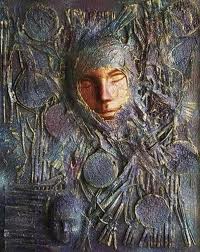
What we need to do again and again is break through (or emerge from) the patterns that have been forced on us, or slipped into media programming, etc.
Many times Sanat Kumara has said that the spiritual process is not about “adding on,” but “letting go of.” He says that emergence returns us to the truth of how we were created in the first place:
Sanat: There is nothing that is added on. What you are doing is emergence but [what is important] is the concept that people have. Not that they are leaving something behind but that they are expanding to incorporate. What it truly is is a return to the truth of how you were created in the first place. (1)
I also learned a great deal about emergence from my karate sensei, Hidehiko Ochia. Karate is all about emerging or breaking through, overcoming one’s fears as a “powerless” person and standing firm but non-threatening.

Hidehiko Ochiai
If one could do it in karate, could one not do it as well in everyday life?
Moreover, chaos and mayhem are the order of the day in many countries around the world. Lightworkers may need to assume an ever-greater role as government is taken from the hands of the corrupt, responsible for the murder of millions via a toxic Covid-19 vaccine and endless wars, given into the hands of the uncorrupted.
That in itself is no guarantee of success in rebuilding government, but, combined with the rising lovelight energies, it will see corruption itself leave this planet as an acceptable political condition.
In the meantime, I’m here concerned with personal growth. What we emerge from are our patterns of behavior (or vasanas, core issues), to allow more and more of who we are to shine through. (2) Lao Tzu tells us:
The student learns by daily increment.
The Way is gained by daily loss,
Loss upon loss until
At last comes rest.
By letting go, it all gets done;
The world is won by those who let it go!
But when you try and try,
The world is then beyond the winning. (3)
“Trying” is an exertion of the will, the very thing we’re wanting to quiet and still. We have to let go of even that!
Nonetheless, there are things that I believe are important in the beginning and not thereafter, once we’re well on our way. Effort is I think important in the beginning, but then is let go of as we advance in our practice.
We’re probably used to taking account of things we achieve. But how does one take account of the achievement of the “loss” of a self, even of no-self? We’re in territory where no guideposts or markers exist. At its peak, the situation can seem like a dark night to the soul.
You and I don’t need to go through this spiritual privation. Our Ascension to a higher dimension, something medieval saints, for example, would literally have died for, is to be given us wrapped up and topped with a bow.
All we have to do is end world war, rebuild the Earth … I was going to say, cross a river, and climb a mountain.
No, this lifetime the mountain is coming to us. And she’s coming loaded with gifts. And all we need to do is allow.
Download Emergence here: https://goldenageofgaia.com/wp-content/uploads/2026/04/Emergence-3.pdf
Footnotes
(1) “Transcript: Sanat Kumara ~ Ascension: Your New Tomorrow, Right Now ~ September 17, 2015,” at http://goldenageofgaia.com/2015/09/20/transcript-sanat-kumara-ascension-your-new-tomorrow-right-now-sept-17-2015/.
(2) On completing our core issues, or what I call “vasanas” or “latent tendencies,” after Ramana Maharshi, see Vasanas: Preparing For Ascension by Clearing Old Issues at https://goldenageofgaia.com/wp-content/uploads/2024/05/Vasanas-Preparing-for-Ascension-R16.pdf
(3) Lao-Tzu, The Way of Life (Tao Te Ching). Trans. R.B. Blakney. New York and Scarborough: New American Library, 1955, 48, 101.