

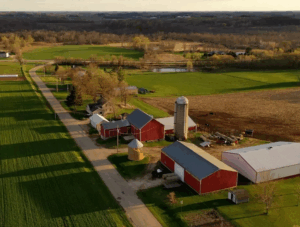
Yesterday, on July 8, 2025 at 10:00 AM, U.S. Secretary of Agriculture Brooke Rollins, Defense Secretary Pete Hegseth, and Attorney General Pam Bondi held a press conference in Washington, D.C., to announce the launch of the National Farm Security Action Plan.
The presser highlighted the Trump administration’s strategy to protect American farmland and food supply from foreign threats. A handful of GOP governors and other key administration officials also took part, each with a personal story of why we need to address the situation, pointing out the connection between how we grow our food and how we protect our nation.
“We feed the world. We lead the world. And we’ll never let foreign adversaries control our land, our labs, or our livelihoods.”
~ Brooke Rollins
Farm Security is National Security: The Trump Administration Takes Bold Action to Elevate American Agriculture in National Security
July 8, 2025, usda.gov
https://tinyurl.com/mjwhtj53
Excerpted:
A Real Threat, a Real Response
Recent events highlight the critical need for this action. Last month, the U.S. Department of Justice charged foreign nationals, including a Chinese Communist Party member, with smuggling a noxious fungus into the United States—a potential agroterrorism weapon responsible for billions in global crop losses.
The scheme involved a U.S. research lab and highlighted a disturbing trend: America’s enemies are playing the long game—infiltrating our research, buying up our farmland, stealing our technology, and launching cyberattacks on our food systems. These actions expose strategic vulnerabilities in America’s food and agriculture supply chain.
Enough is enough.
Protecting the homeland begins with protecting our farmland, and the National Farm Security Action Plan puts American farmers and ranchers first by safeguarding our food supply, strengthening critical infrastructure, and defending U.S. agricultural innovation from foreign adversaries.
A Comprehensive Action Plan for Agriculture Security
The National Farm Security Action Plan takes aggressive action across seven critical areas.
- Secure and Protect American Farmland – Address U.S. foreign farmland ownership from adversaries head on. Total transparency. Tougher penalties.
- Enhance Agricultural Supply Chain Resilience – Refocus domestic investment into key manufacturing sectors and identify non-adversarial partners to work with when domestic production is not available. Plan for contingencies.
- Protect U.S. Nutrition Safety Net from Fraud and Foreign Exploitation – Billions have been stolen by foreign crime rings. That ends now.
- Defend Agricultural Research and Innovation – No more sweetheart deals or secret pacts with hostile nations. American ideas stay in America.
- Put America First in Every USDA Program – From farm loans to food safety, every program will reflect the America First agenda.
- Safeguard Plant and Animal Health – Crack down on bio-threats before they ever reach our soil.
- Protect Critical Infrastructure – Farms, food, and supply chains are national security assets—and will be treated as such.

Even though Canada is the foreign country that owns the most U.S. agricultural land at 32%, China’s less than 1% of foreign owned farmland is problematic, because…


Click the image above for the clip…
Grok weighs in:
- The National Farm Security Action Plan, launched on July 8, 2025, by the Trump Administration, addresses a 2.7% foreign ownership of U.S. farmland (35.2 million acres as per 2019 USDA data), with China holding significant portions, raising concerns backed by a 2024 CSIS report highlighting potential national security risks from foreign control of food supply chains.
- This plan responds to a surprising lack of enforcement of the 1978 Agricultural Foreign Investment Disclosure Act (AFIDA), where penalties for unreported land purchases (up to 25% of fair market value) have not been applied since 2014, exposing vulnerabilities in a sector critical to U.S. resilience, as noted in a 2024 Fox News article on agroterrorism threats. Some argue that the Obama era’s lax oversight allowed foreign entities (e.g., Chinese investors) to acquire land unchecked.